Fast dispatch means little if the wrong item lands on the customer’s doorstep. Here is how Sydney retailers, wholesalers and eCommerce brands can build a fulfilment process that delivers both speed and accuracy.


Pick and Pack Fulfilment in Sydney: How to Reduce Errors and Improve Dispatch Speed
A customer may never see your warehouse, but they experience its performance the moment a parcel arrives. The right product, cleanly packed and delivered when promised, builds trust. A wrong size, a missing item, or an order that sits for two days before dispatch does the opposite.
That makes pick and pack fulfilment much more than a back-room task. It is where inventory accuracy, warehouse layout, staff training, packaging, carrier timing and customer experience meet. For Sydney businesses, the pressure is growing: Australia Post’s 2026 eCommerce Report says 82% of Australian households shopped online in 2025, NSW accounted for $28.5 billion in online spending, and 26% of shoppers expect same- or next-day delivery when an order is urgent.
The answer is not simply asking warehouse staff to move faster. Speed without control creates mis-picks, damaged goods, returns and rework. The better approach is to design a repeatable system in which the correct action is also the quickest action.
What pick and pack fulfilment actually involves
Pick and pack fulfilment begins when an order enters the warehouse system and ends when the correctly packed parcel or pallet is handed over for delivery. In a dependable operation, that journey usually includes five connected stages.
01
Order received and validated
02
Stock allocated and pick task released
03
Items located, picked and scanned
04
Order checked, packed and labelled
05
Manifest closed and order dispatched
Figure 1. Each hand-off should create a digital or physical confirmation, making errors easier to prevent and investigate.
For a single-SKU order, those steps can happen in minutes. A wholesale order with mixed cartons, retailer-compliant labels or kitting requirements may need more checks. The aim is not to force every order through one rigid process. It is to establish the simplest controlled workflow that fits the order profile.
A Sydney 3PL may also coordinate the next step: parcel lodgement, palletised metro delivery, proof of delivery or transfer to a national carrier. Dispatch speed therefore depends on the entire chain, not only the moment a picker removes an item from a shelf.
The fastest warehouse is not the one where people rush. It is the one where stock, data, packaging and carrier cut-offs are already aligned.
Why picking errors and dispatch delays happen
Most fulfilment failures have an upstream cause. A wrong item in a parcel may begin with poor product labelling. A missed carrier collection may begin with orders entering the warehouse late or stock appearing available online when it is not physically in the pick face.
Common causes include:
- Look-alike SKUs stored together. Similar packaging, sizes or colour variants make visual selection unreliable.
- Unclear or inconsistent location codes. Staff lose time searching, backtracking or asking where stock belongs.
- Manual data entry. Re-keying orders, quantities or addresses introduces errors and slows release to the warehouse.
- Poor inventory accuracy. The system promises stock that is damaged, misplaced, quarantined or already allocated elsewhere.
- One picking method for every order. A process suited to wholesale cartons may be painfully slow for hundreds of small eCommerce orders.
- Packaging decisions made at the bench. Staff waste time choosing cartons, finding inserts or checking client instructions.
- No final verification. An error made during picking travels straight into the parcel.
- Unplanned peaks. Promotions, Christmas trading and sudden wholesale orders overwhelm labour, benches or replenishment.
“She’ll be right” may work for a backyard job. It is not a warehouse quality-control system. If instructions live in someone’s head, the operation becomes vulnerable whenever volumes rise or experienced staff are absent.
Start by tracing a delayed or incorrect order backwards. Ask where the first mismatch appeared: order data, stock quantity, storage location, picking, packing, labelling or carrier hand-over. Fix that point in the process rather than adding another check at the very end.
Seven practical ways to reduce pick and pack errors
1. Give every SKU and location a clear identity
Every sellable unit should have a unique SKU, readable barcode and unambiguous description. Every pick location should also have a logical code that tells staff exactly where to go. Avoid relying on product names such as “blue bottle” when the range includes three blue bottles that look almost identical.
Barcode scanning connects the physical item to the digital order. At minimum, scan at picking or packing; for higher-risk products, scan at receiving, put-away, replenishment, picking and dispatch. GS1 Australia links accurate, visible inventory with improved DIFOT performance, order accuracy and shipment reliability.
2. Slot stock according to demand and handling needs
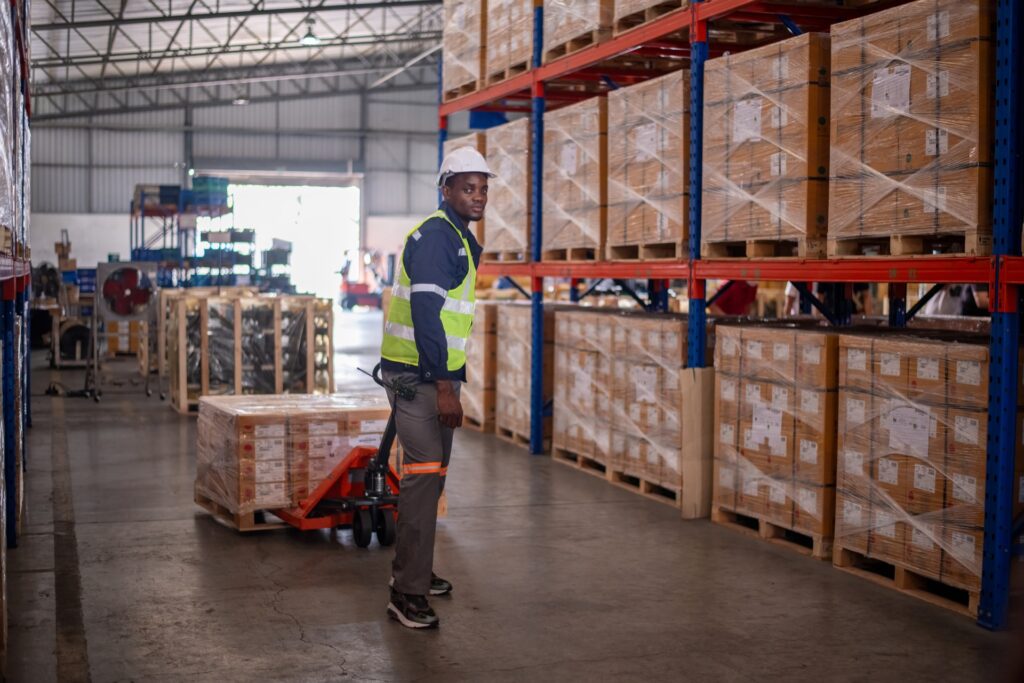
Place fast-moving SKUs in easy-to-reach pick faces close to packing, while keeping slow movers farther away. Separate similar-looking variants and store frequently purchased combinations near one another where practical. Heavy products should be positioned to reduce unnecessary lifting and awkward reaches.
This is about safety as well as speed. SafeWork NSW identifies repetitive movement, force and awkward posture as risk factors in hazardous manual tasks. A well-designed layout can shorten travel while reducing strain.
3. Match the picking method to the order profile
There is no universally “best” picking method. The right one depends on SKU count, order lines, product size, daily volume and the shape of demand.
Picking method
Best suited to
Main advantage
Watch-out
Single-order
Low volume, complex or high-value orders
Simple ownership and traceability
Too much walking at higher volumes
Batch
Many small orders sharing common SKUs
Reduces repeated travel
Needs disciplined sorting
Wave
Orders grouped by carrier, route or cut-off
Aligns labour with dispatch deadlines
Poor wave planning can create congestion
Zone
Large ranges spread across warehouse areas
Pickers become efficient in defined zones
Requires clean order consolidation
Carton or pallet
B2B and wholesale orders
Efficient for larger quantities
Unit-of-measure errors can be costly
4. Build verification into the workflow
A reliable process confirms the item, quantity and order before the carton is sealed. This might involve scan-to-order verification, weight checks, a second-person check for high-value goods, or photographic evidence for selected orders. The control should reflect the risk: a low-value single-item order may need one scan, while a regulated or expensive shipment may need several confirmations.
5. Standardise the packing bench
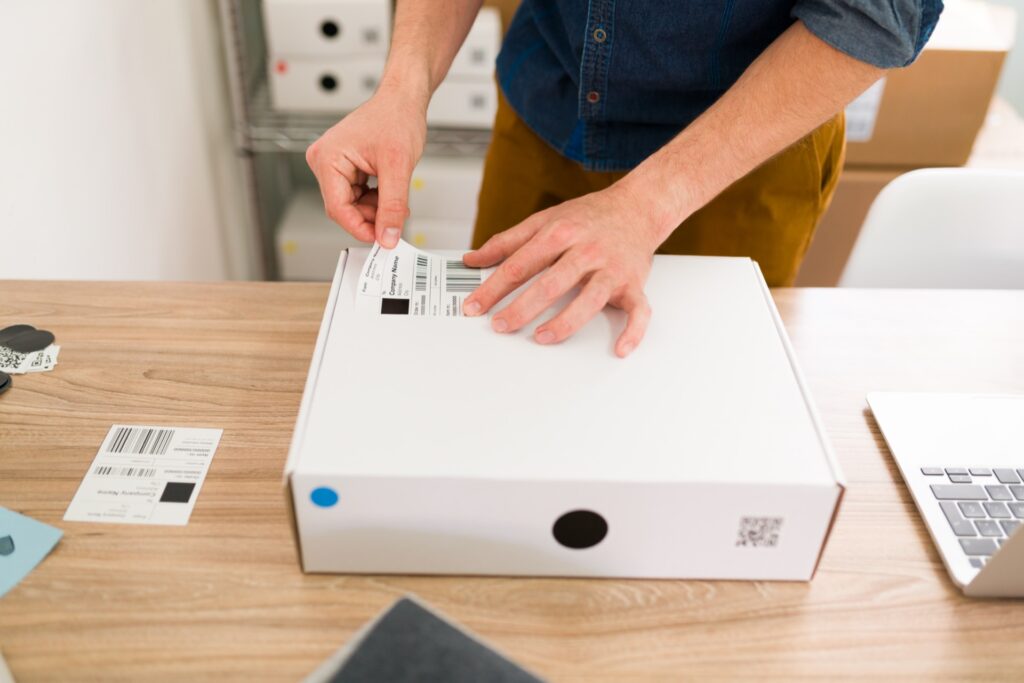
Keep approved cartons, satchels, void fill, tape, labels and client inserts within reach. Use clear packing rules for fragile items, liquids, bundles, retail labelling and presentation. If a brand has multiple packaging experiences, the order or SKU should trigger the correct instructions automatically.
6. Keep inventory accurate before orders drop
Fast picking is impossible when staff are hunting for missing stock. Control receiving and put-away, scan replenishments and use cycle counts to check high-volume or high-value locations regularly. Quarantined, damaged and returned stock should have distinct statuses so it cannot be sold by accident.
7. Record the cause of every fulfilment error
Do not group all problems under “warehouse error”. Distinguish between wrong SKU, wrong quantity, missing item, damage, incorrect label, late dispatch, carrier delay and customer address issue. Patterns tell you where to improve. Without cause codes, the same mistake simply returns wearing a different hi-vis vest.
How to improve dispatch speed without sacrificing accuracy
The dispatch clock begins before the picker does. To move orders faster, work backwards from each carrier collection or delivery run and remove the waiting time between stages.
- Agree on a realistic daily cut-off. Define when an order must be received, paid and free of holds to qualify for same-day dispatch.
- Integrate sales channels with the warehouse system. Orders from platforms, marketplaces or EDI should flow in without re-keying.
- Release work in planned waves. Prioritise express orders, Sydney metro runs, wholesale bookings and carrier deadlines.
- Replenish before the rush. Move reserve stock into pick faces before each shift or campaign peak.
- Pre-configure packaging and carrier rules. Automate service selection, label creation and paperwork where possible.
- Create an exception lane. Hold orders with missing data, stock discrepancies or address problems outside the normal flow so they do not block clean orders.
- Plan for peaks before promotions launch. Share forecasts, campaign calendars and inbound dates with the warehouse early.
Be careful with delivery promises. The Australian Competition and Consumer Commission says businesses should give clear, accurate information about stock availability and likely delivery timing, then proactively update customers if delays arise. A precise dispatch cut-off and honest delivery estimate are better than an ambitious promise the operation cannot consistently keep.
For Sydney orders, it is also useful to separate dispatch speed from delivery speed. The warehouse controls whether an order is ready before cut-off and handed over correctly. Traffic, delivery density, service selection and failed delivery attempts can affect the final leg. Measure both stages so a carrier issue is not mistaken for a picking issue—or vice versa.
The fulfilment KPIs worth measuring
Good metrics make problems visible without burying the team in dashboards. Begin with a small set that connects warehouse performance to customer outcomes.
- Picking accuracy: correct order lines picked as a percentage of total order lines picked.
- Perfect order rate: orders dispatched complete, accurate, undamaged, correctly documented and on time.
- On-time dispatch rate: qualifying orders handed over by the agreed deadline.
- Pick-to-dispatch time: elapsed time from pick release to manifest or carrier hand-over.
- Inventory accuracy: system quantity compared with verified physical stock.
- Cost per order: labour, packaging and fulfilment cost divided by orders shipped.
- Fulfilment-related return rate: returns caused by the wrong item, wrong quantity, damage or packing failure.
Picking accuracy (%) = Correct order lines ÷ Total order lines picked × 100
Review results by client, channel, SKU, shift, order type and error cause. A warehouse-wide average can look healthy while one product family or sales channel quietly creates most complaints. Set targets from a verified baseline and define the same measurement rules with your 3PL, so everyone is reading the same scoreboard.
When to outsource pick and pack fulfilment in Sydney
In-house fulfilment can work well at lower volumes, especially when founders need close contact with the product. Outsourcing becomes attractive when order handling begins to compete with sales, customer service and product development—or when the cost of maintaining space, staff, systems and carrier processes is no longer justified.
Signs it may be time to speak with a 3PL
- Order errors or late dispatches rise whenever sales spike.
- Your team regularly runs out of storage or packing space.
- Inventory figures cannot be trusted across channels.
- You need kitting, compliance labelling, rework or quality control.
- Wholesale and eCommerce orders require different workflows.
- You want a scalable Sydney base without operating your own warehouse.
When comparing providers, give each one a realistic operational profile: number of SKUs, orders per week, average items per order, pallets in storage, product dimensions and weights, channel mix, peak volumes, returns, dangerous or fragile goods, kitting needs and service expectations. Ask how inventory is tracked, where barcode checks happen, what qualifies for same-day dispatch and how errors are investigated.
MCS Logistics Group provides tailored pick and pack fulfilment from its Campbelltown warehouse for growing eCommerce brands, retailers and wholesalers. Services can include batch, wave or single-order picking, barcode scanning, quality control, custom packaging, kitting, storage and palletised Sydney metro delivery. Rather than forcing every client into the same process, the workflow is designed around the product, order profile and growth plan.
The goal is simple: fewer preventable errors, faster dependable dispatch and a fulfilment operation that protects your reputation as volumes grow.
Ready to make fulfilment simpler?
Tell MCS Logistics Group about your SKU count, weekly order volume, items per order and storage needs. We will help map a practical pick and pack solution for your business.