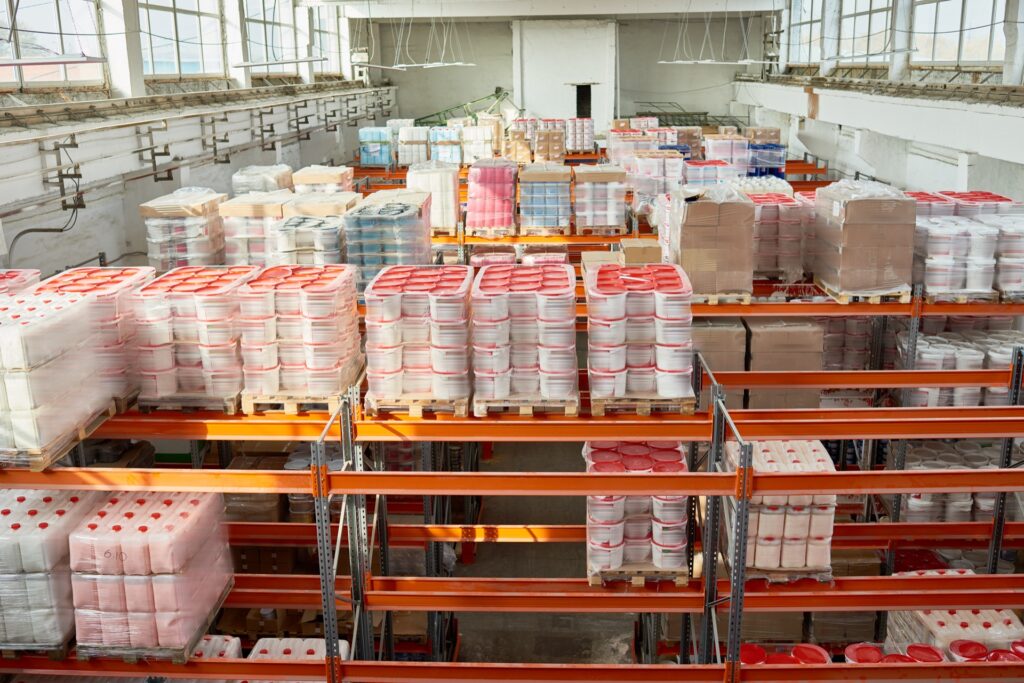
Temporary storage can give your business breathing room during an import, promotion, relocation or seasonal peak. The key is knowing when you need warehouse capacity, and when you need a 3PL operation around it.


When to Use Short-Term Warehouse Storage in Sydney
Warehouse space rarely becomes a problem at a convenient time. A container lands earlier than expected. A retailer delays a delivery window. A promotion performs better than forecast. Renovation works take over the stockroom. Suddenly, pallets are sitting where people need to work and the loading area looks like a game of Tetris nobody volunteered to play.
Short-term warehouse storage gives Sydney businesses a flexible place to hold inventory for a defined period without immediately committing to a larger premises or a long warehouse lease. Depending on the arrangement, the warehouse can also receive goods, unload containers, palletise loose cartons, record stock, complete labelling or kitting, pick orders and coordinate dispatch.
That flexibility is useful, but temporary storage is not automatically the cheapest or simplest answer. The right choice depends on why the stock needs to move, how quickly it will leave, how often it must be accessed and what handling or compliance requirements apply.
Short-term storage is a supply-chain buffer, not just spare space
Short-term warehouse storage usually means commercial inventory held for days, weeks or a few months. There is no universal cut-off. A practical storage period is agreed around the stock profile, available warehouse capacity, inbound timing and the plan for releasing the goods.
The most useful way to think about it is as a buffer between two stages of your supply chain. Stock has arrived, but the next destination or activity is not ready. The warehouse absorbs that timing mismatch while keeping the goods organised and available.
In a 3PL environment, the service may include:
- unloading palletised or loose-loaded containers;
- palletising, wrapping, counting and put-away;
- pallet, carton or SKU-level inventory records;
- secure ambient storage for an agreed period;
- batch releases, cross-docking or full-pallet dispatch;
- pick and pack for retail, wholesale or eCommerce orders;
- labelling, kitting, rework and quality checks; and
- coordination with carriers or Sydney metro distribution.
A business that only needs sealed pallets held for two weeks has a different requirement from one that needs 20 SKUs counted, relabelled and dispatched to multiple stores. Both are short-term storage projects, but the labour, systems and risk are very different.
The best temporary storage plan starts with the exit. Know how the stock will leave before deciding how it should arrive, be labelled and be stored.
Eight times short-term warehouse storage makes sense
1. Your seasonal stock exceeds normal capacity
Christmas trading, Black Friday, Easter, back-to-school campaigns and industry-specific peaks can push inventory well beyond the capacity you need for the rest of the year. Taking a larger permanent warehouse to cover a temporary spike can leave you paying for empty space for months.
Overflow storage lets you bring stock in before the rush, then release it in controlled batches. For better results, give the warehouse a forecast showing expected pallets, SKUs, arrival dates, promotion dates and likely order volumes. A forecast does not need to be perfect, but it should be better than “a fair bit is coming sometime next month”.
2. An import arrives before your business is ready
International freight does not always follow the retail calendar. A vessel schedule changes, a supplier ships early or a delivery site is not ready. Short-term storage can bridge the gap after goods are lawfully released and made available for movement.
If the stock is imported, storage does not replace customs or biosecurity obligations. The Australian Border Force explains that declarations may be required to clear imported goods from customs control. The Department of Agriculture, Fisheries and Forestry’s BICON system identifies whether goods are permitted, require documents or treatment, or need an import permit.
Where the warehouse can also manage container unloading and inbound receipting, stock can move from devanning to storage through one controlled workflow. This may also help the importer return an empty container sooner, subject to transport, clearance and warehouse arrangements.
3. Your retailer or project site changes the delivery date
Retail distribution centres, construction sites, event venues and client warehouses often work to booking windows. If the receiving party postpones, sending the truck anyway is not a plan. Temporary pallet storage provides a holding point until the new appointment is confirmed.
This is particularly useful when stock must be staged by store, purchase order, project phase or delivery route. Clear segregation at intake prevents a quick storage job from becoming a sorting job on dispatch day.
4. You are relocating, renovating or reorganising
A move creates operational risk when tradespeople, office teams, forklifts and inventory all compete for the same floor space. Short-term offsite storage can clear working areas while keeping saleable stock away from dust, accidental damage and repeated handling.
For a relocation, label every pallet by destination zone or department before collection. Agree which goods must remain accessible and which can stay untouched until the new site is ready.
5. A promotion or new product launch is uncertain
Campaign demand is difficult to predict, especially for a first launch. Too little stock means missed sales. Too much stock can choke your normal operation. Temporary storage gives the launch a controlled reserve without forcing all inventory into the active pick face on day one.
The reserve can be replenished into fulfilment as demand becomes clearer. If the warehouse also provides value-added services, it may be able to assemble promotional packs, apply campaign labels or reconfigure cartons before release.
6. You have project stock with a defined end date
Fit-outs, events, government contracts, product rollouts and promotional campaigns may require inventory for only one project. Short-term storage aligns the warehouse commitment with the project timeline and can support scheduled releases to several destinations.
Project stock should be tracked separately from regular inventory, even if the same SKU appears in both. Use a project code, lot reference or dedicated locations so stock is not consumed by everyday orders.
7. You need time to inspect, relabel or rework stock
Goods may arrive with incorrect barcodes, damaged cartons, non-compliant labels, mixed SKUs or packaging that is unsuitable for the intended retailer. Moving them straight into saleable inventory creates confusion and risk.
A temporary quarantine or work area gives the team time to inspect and correct the stock. For food and other regulated products, confirm the warehouse has the relevant approvals and that the proposed work is permitted. MCS Logistics Group operates from a HACCP-certified Campbelltown facility and provides storage within an approved Class 2.2 biosecurity premise for eligible goods, subject to product suitability, capacity and agreed terms.
8. You need contingency space during disruption
Flooding, equipment failure, fire remediation, lease issues or a supplier problem can make normal space unavailable with little notice. Short-term storage may keep stock protected and orders moving while the underlying problem is resolved.
Emergency moves are rarely tidy, so document what is being transferred. Photograph pallet condition, record quantities, identify urgent orders and nominate one person authorised to issue instructions. A fast move without a stock record merely relocates the chaos.
Short-term storage is most valuable when it protects continuity. It should give the business time and control, not hide an inventory problem in another building.
3PL warehouse storage or self-storage: which do you need?
Self-storage can suit a small quantity of non-palletised stock that the business owner can carry, organise and collect. It is usually a space rental. A 3PL warehouse is designed to receive and move commercial inventory using people, equipment, systems and agreed procedures.
Requirement
Self-storage unit
Short-term 3PL storage
Best for
Small quantities you manage yourself
Pallets, cartons, multiple SKUs and commercial stock flows
Inbound handling
You normally unload and move the goods
Warehouse team can receive, unload, count and palletise as agreed
Inventory visibility
Your own spreadsheet or manual records
Receipting, stock control and reporting through warehouse processes
Order fulfilment
You collect, pick and ship
Full-pallet, carton, B2B or eCommerce dispatch can be added
Equipment
Loading access, forklifts, pallet racking and packing areas
Limited, depending on the site
Value-added work
Usually completed by your own team
Labelling, kitting, rework and quality control may be available
Commercial releases
You coordinate every movement
Warehouse can stage and hand over goods to carriers or arrange distribution
A quick decision rule
Choose space-only storage when you can safely handle, track and transport the goods yourself.
Choose a 3PL warehouse when the stock must be unloaded, palletised, recorded, accessed by SKU, processed, picked or dispatched while it is stored.
The cheapest weekly space rate is not always the lowest total cost. If your team must make repeated trips, hire lifting equipment, build stock records and arrange every carrier collection, a basic unit may cost more in labour and disruption than it first appears.
Plan the full journey from arrival to final release
A temporary project still needs a proper inbound plan. The warehouse must know what is arriving, how it is packed, what condition to expect and how the stock should be identified. Good preparation reduces waiting time, unexpected handling and disputes about quantities or damage.
01
Forecast space, dates and handling needs
02
Book inbound transport or container unloading
03
Receive, verify and receipt the stock
04
Store, report and process approved work
05
Release by order, batch, pallet or project stage
Figure 1. A clear exit method determines the right receiving, labelling and location strategy.
Before the first delivery, provide:
- expected arrival date and delivery booking details;
- number of pallets, cartons or containers;
- pallet dimensions, height and weight;
- SKU list, carton quantities and purchase-order references;
- whether goods are palletised, slip-sheeted or loose-loaded;
- photos or packing lists where available;
- food, quarantine, dangerous goods, fragile or special-handling requirements;
- the expected storage period and likely peak pallet count;
- any labelling, kitting, inspection or rework instructions; and
- the planned release method, destinations and carrier arrangements.
For imported stock, do not assume every warehouse can receive every product. Confirm approvals, treatment status, packaging, cleanliness, documents and delivery authority before the container or vehicle is dispatched. The importer remains responsible for meeting applicable government requirements.
Exit planning matters just as much. Decide whether the goods will leave as full pallets, mixed pallets, cartons or individual orders. Ask whether urgent releases are possible, what notice is required and how the warehouse should handle remaining stock if the project runs longer than planned.
Understand the total cost, not only the weekly storage rate
Short-term warehouse pricing is normally built from the activities the stock requires. Two clients using the same number of pallet spaces can have very different costs if one sends sealed pallets in and out once, while the other needs cartons picked every day.
Storage
Usually based on pallets, cartons, cubic space or dedicated area over an agreed period.
Inbound handling
Receiving, unloading, palletising, checking, receipting and put-away.
Outbound handling
Retrieval, picking, staging, wrapping, documentation and carrier hand-over.
Materials
Pallets, wrap, labels, cartons, void fill, tape and other consumables.
Value-added work
Kitting, relabelling, compliance work, rework, assembly or quality inspection.
Transport
Inbound collection, Sydney metro delivery, carrier charges or waiting time where applicable.
Ask whether storage is billed daily, weekly or monthly; whether part periods are rounded; and whether there is a minimum handling or account charge. Confirm what counts as a pallet position, especially for oversized, unstable or non-stackable goods.
A useful quote should state the assumptions behind the price. If the quote assumes 20 standard pallets but 28 oversized pallets arrive, the cost will change because the warehouse is providing a different service from the one priced.
Short-term storage is usually financially sensible when it helps avoid a larger long-term property commitment, prevents operational downtime, keeps containers or vehicles moving, protects stock from unsuitable conditions, or supports sales that would otherwise be delayed. Compare the storage project with the cost of the disruption it prevents.
How to choose a short-term warehouse in Sydney
Location matters, but the nearest building is not automatically the right warehouse. For many businesses, dependable receiving, accurate inventory records and a workable release process are more valuable than saving a few kilometres on one trip.
Questions to ask a prospective warehouse
- Can you accept the expected quantity on the required date?
- What product types, pallet sizes and weights can you handle?
- Can you unload containers or loose-loaded freight?
- How will stock be counted, receipted and reported?
- Can you segregate stock by SKU, project, batch or status?
- What security, access control and monitoring are in place?
- Can you pick cartons or individual orders if the scope changes?
- Do you offer labelling, kitting, inspection or rework?
- What notice is required for inbound bookings and outbound releases?
- Can you coordinate freight or use the client’s carrier account?
- What happens if the storage period extends?
- Which goods are prohibited or require prior approval?
MCS Logistics Group provides flexible short-term and overflow warehouse storage in Sydney from its Campbelltown facility. The site offers approximately 5,500 pallet positions, inventory management, secure monitored storage, container unloading, order fulfilment, value-added services and coordinated dispatch and distribution. The family-run team has more than a decade of hands-on 3PL experience supporting importers, distributors, retailers and eCommerce brands.
If the requirement begins as temporary storage and later becomes regular fulfilment, the stock can remain within a structured 3PL workflow rather than being moved again. That option can be valuable when a seasonal trial becomes a long-term sales channel or when an importer decides to outsource more of the operation.
Frequently asked questions
- How short can short-term warehouse storage be?
The practical minimum depends on the warehouse, product, pallet quantity, handling requirements and available capacity. Some projects last only a few days, while seasonal or transition storage may run for several weeks or months. - Can a 3PL receive a container directly into temporary storage?
Yes, where arranged in advance. A 3PL can unload, palletise, count, receipt and store stock, then release it by pallet, carton or order according to the agreed workflow. - Can food products use short-term storage?
Potentially, but the product, packaging, handling and compliance requirements must suit the facility. Confirm food safety, temperature, allergen, quarantine and labelling needs before booking. MCS provides HACCP-certified ambient storage for suitable food and beverage products. - What information is needed for a quote?
Provide estimated pallet or carton quantity, product type, dimensions and weights, arrival date, expected storage period, inbound format, outbound plan, SKU count, handling needs and any food, dangerous goods, biosecurity or temperature requirements.
Used well, short-term warehouse storage is not a stopgap. It is a controlled way to absorb disruption, protect working space and keep stock moving without taking on more permanent capacity than the business needs.
Need temporary pallet storage in Sydney?
Tell MCS Logistics Group what is arriving, how many pallets or cartons you expect, how long the stock may stay and how it needs to leave. Our team will map a practical storage and handling solution around your timeline.