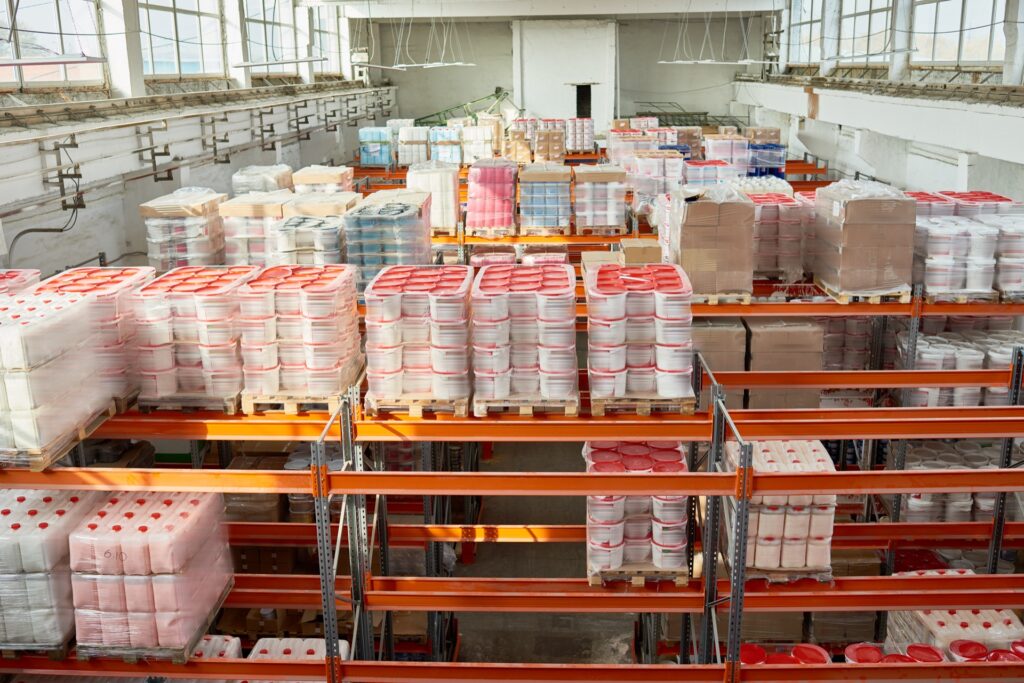
Storage is only one part of the bill. Understand receiving, pick fees, packaging, freight and minimums so you can compare quotes against the way your business actually operates.


A $3 pick and pack charge does not mean an order costs $3 to fulfil. Your stock still needs to arrive, occupy warehouse space, go into packaging and reach the customer.
For an importer holding pallets between wholesale orders, storage and inbound handling may drive the budget. For an eCommerce brand sending hundreds of parcels, picking, packaging and freight can carry more weight. Both businesses might ask for “3PL pricing in Sydney”, but they need very different quotes.
This guide explains how a quote is constructed, what changes your price and how to turn a list of rates into a realistic monthly forecast. All dollar amounts are Australian dollars. Published examples and hypothetical calculations are identified below; they are not MCS Logistics Group’s rates.
1. What should you budget for Sydney 3PL warehousing?
There is no single monthly price that fits every business. A storage-only arrangement needs a different budget from a service that receives stock, fulfils orders, handles returns and organises delivery.
Public pricing gives you a starting point. At the time of checking, Sydney-based Freedom Fulfilment published pallet storage at $5.50 per pallet per week, receiving at $14 per pallet, and pick and pack at $3 per order including the first item, plus $0.50 per additional item. Its calculator also listed a $149 monthly software and account management charge, with GST excluded.[1]
For broader context, TLC Enterprise’s Australian pricing guide listed storage at $2.50–$10 per pallet per week and receiving at $20–$50 per pallet. Those are provider-published indications, not a verified Sydney market average or a promise that your stock qualifies.[2]
The practical lesson is to use published prices as a sense-check, then ask what they include. A pallet of neatly labelled cartons, a mixed container of loose stock and a fragile product requiring individual inspection are different jobs.
Your monthly budget starts with:
Storage + receiving + order handling + packaging + freight + recurring fees + returns and other required work. Then apply the agreed minimum-charge rules and add applicable GST. Keep one-off setup costs separate.
If you only need storage, remove the activities you will not use. Keep inbound and outbound handling, transport and any account fees in the forecast. Renting pallet space does not automatically include moving goods into and out of it.
The cheapest pallet rate can still produce the more expensive monthly bill.
2. The charges that build your 3PL quote
Start by asking what event triggers each fee and which unit is counted. “Per pallet”, “per order”, “per SKU line” and “per item” are not interchangeable.
Storage: what space is billed, and for how long?
Storage may be quoted per pallet position, bin, shelf location or cubic metre, with a daily, weekly or monthly billing period. Check whether the charge follows occupied space, reserved capacity, an average balance or the highest balance during the period.
A weekly rate also needs converting properly. For annual budgeting, multiply it by 52 and divide by 12. $6 per pallet per week equals approximately $26 per average month, rather than $24. Actual invoices may follow calendar weeks, part-week rules or another agreed method.
Ask what qualifies as a standard pallet: footprint, height, weight, overhang and stackability. A half-empty pallet may still occupy a full position. Oversized or non-stackable goods may require more space. Confirm whether active picking locations are charged alongside reserve pallets and whether slow-moving stock attracts an additional fee.
Finally, check when charging starts and stops. Does a pallet dispatched early in the week still incur the whole week’s storage charge? Does reserving seasonal capacity create a commitment even if the space is unused?
Receiving: getting stock into the system
Receiving can cover unloading, checking stock against documents, recording quantities and moving goods into their locations. The quote should state which steps are included and whether the fee is per pallet, carton, unit, delivery or labour hour.
For container arrivals, separate the physical unpack from the inventory work. Ask whether container unloading includes SKU sorting, pallet building, wrapping, discrepancy reporting, receipting and putaway. Some quotes bundle these steps; others split them into line items.
A floor-loaded container with mixed, unlabelled cartons can require a different labour allowance from a delivery of ready-to-store pallets. Provide the packing list before seeking a price and identify any inspection, barcode or relabelling work. See our container unloading guide for Sydney importers for the wider inbound process.
Pick fees and order handling: define a “pick”
One model charges a base order fee including the first item, then a fee for each additional unit. Another charges an order fee plus every unit picked. A wholesale workflow may charge by full carton or pallet instead.
Suppose an order contains three bottles of the same product. That is one SKU line but three units. A per-line tariff can produce a different charge from a per-unit tariff. Ask how repeated units, case quantities, mixed cartons and split shipments are counted.
If the first unit is included:
Pick fees = orders × base fee + additional units × additional-unit fee.
If every unit is charged:
Pick fees = orders × order fee + all units picked × unit fee.
Check whether packing labour, scanning, shipping labels, carton picking, replenishing pick locations and dispatch handling are included. Also confirm the order cut-off, turnaround and any priority-service charge. A low rate is difficult to assess without the service attached to it.
Packaging: materials and presentation
The labour to pack an order and the materials used to protect it are separate questions. Confirm whether cartons, satchels, tape, void fill and labels are included, charged individually or supplied by your business.
Branded tissue, inserts, gift wrapping, tamper seals and custom cartons can add material or labour charges. If you supply packaging, ask about receiving it, storing it and replenishing the packing bench.
Provide a photograph or sample of the finished parcel. “Pack it nicely” is hard to price consistently; a defined packing instruction is much easier.
Freight: the packed parcel and delivery address matter
Freight should be modelled separately from warehouse handling unless the quote explicitly bundles it. Supply packed dimensions and weights, destination postcodes, delivery speed and the number of parcels or pallets per shipment.
Australia Post’s business guidelines show why dimensions matter: for domestic parcels in other packaging, postage can be based on the greater of actual and cubic weight, plus destination. Its prepaid and flat-rate packaging have different rules. Your carrier service and contract determine the applicable method.[3]
For pallet freight, identify business or residential delivery, forklift availability, tail-lift requirements and delivery appointments. Ask about regional or remote areas, waiting time, redelivery, failed delivery and additional handling.
Clarify whether the freight price is a carrier pass-through, includes a margin, or attracts a separate administration fee. If you use your own carrier account, check whether booking, manifesting and handover are still charged.
Fuel levies need their own question: are they included, separately applied or adjustable? Australia Post publishes a changing fuel surcharge for relevant services, so an old freight estimate may need updating.[4]
Minimums: a billing floor or an extra fee?
A minimum monthly spend can be a floor under eligible charges. A fixed account fee is a recurring charge. A minimum order volume is an operating or contractual commitment. Ask which one applies.
For a hypothetical $500 minimum, if eligible warehouse activity totals $300, the top-up is $200. The eligible amount becomes $500; it does not become $800. If a separate $150 software fee is excluded from the minimum, that takes the subtotal to $650 before other excluded services and GST.
Request the eligible-charge list in writing. Storage, receiving, returns, packaging and freight may be treated differently. Ask whether the minimum changes during onboarding, quiet months, promotions or a pause in trading.
Software, onboarding and account management
Separate the one-off costs of getting started from ongoing charges. Your quote should address stock migration, opening counts, data clean-up, integrations, user access, reporting and support.
Confirm which connections are standard and which need custom work. An included store integration does not necessarily cover a bespoke ERP connection, retailer EDI or a customised reporting feed. Ask about ongoing maintenance and the approval process for extra work.
Returns, rework and other exceptions
A return may need receipting, inspection, photography, repacking, a stock-status decision and restocking. Check whether the fee is per returned parcel or per item, and whether return freight is separate.
Other work to discuss includes kitting, assembly, compliance labelling, barcode application, stocktakes, urgent orders, disposal and moving stock to another warehouse. Ask for the charging unit, any minimum labour block and the point at which your approval is required.
For imported stock, also establish which costs sit outside the warehouse quote, such as port cartage, customs brokerage, duties, import GST, examinations and container-related charges. Assign responsibility for bookings and deadlines before the shipment arrives.
3. A worked example: turning rates into a monthly bill
Consider a hypothetical eCommerce business dispatching 800 orders a month, averaging 2.2 units per order. It holds 20 billable pallet positions, receives 12 pallets and processes 24 single-item returns during that month.
The following prices are invented to demonstrate the calculation. This is not an MCS quote, a provider rate card or an estimate for your business.
Illustrative monthly model: AUD, excluding GST
Charge
Assumption and calculation
Monthly cost
Storage
20 pallet positions × $6/week × 52 ÷ 12
$520.00
Receiving
12 ready-to-store pallets × $18; no container unpack
$216.00
Base pick and pack
800 orders × $3; first unit included
$2,400.00
Additional units
(800 × 2.2 − 800) = 960 units × $0.50
$480.00
Packaging
800 parcels × $0.80 average materials cost
$640.00
Returns processing
24 single-item returns × $4
$96.00
Software/account fee
Fixed monthly charge
$150.00
Warehouse and fulfilment subtotal
No minimum top-up assumed
$4,502.00
Outbound freight
800 single-parcel orders × $10 assumed average, including applicable carrier surcharges
$8,000.00
Total excluding GST
Warehouse services + outbound freight
$12,502.00
Illustrative GST
10%, assuming all listed charges are taxable
$1,250.20
Total including GST
Illustrative cash outlay
$13,752.20
Assumptions: 20 positions remain billable for the full period; weekly storage is converted to an annualised monthly budget; one parcel per outbound order; standard packing labour is in the base fee. No setup, inbound transport, container unloading, return freight, special handling or other exception charges are included. Actual billing periods and applicable services must be confirmed.
GST is generally 10% on most goods and services sold in Australia. The GST line above is an arithmetic illustration under the stated assumption, not a determination of the tax treatment of every logistics service.[5]
What does this cost per order?
The warehouse and fulfilment subtotal works out to $5.63 per outbound order. Including outbound freight, the planning figure becomes $15.63 per order, excluding GST. Neither figure is the advertised $3 base pick fee.
That blended metric allocates this month’s receiving, storage, returns and account costs across outbound orders. It is useful for budgeting, but it is not the incremental cost of shipping one more order. A large inbound delivery or quiet sales month can change it substantially.
Why “cheaper picking” may not be cheaper overall
At the same 2.2 units per order, hypothetical Provider A charges $2.50 including the first unit plus $1 for each extra unit. Provider B charges $3 including the first unit plus $0.50 for each extra unit.
A averages $3.70 per order; B averages $3.60. B’s higher headline fee produces $80 less in picking charges across 800 orders. That comparison still excludes storage, packaging, freight, minimums and service differences.
4. What information affects your 3PL price?
“We have about 20 pallets” is a starting point, but it leaves the warehouse guessing about the work attached to those pallets. Send each provider the same operating brief.
Your quote-ready information checklist
Information to supply
Why it may change the quote
Product and SKU file
SKU count, barcodes, unit and carton dimensions, weights, units per carton.
Defines storage layout, pick locations, scanning and handling requirements.
Storage profile
Average and peak pallets or cubic metres, pallet dimensions, stackability and expected holding time.
Shows occupied space, capacity commitments and seasonal pressure.
Inbound profile
Pallets/cartons per delivery, frequency, container sizes, floor-loaded or palletised stock, packing lists.
Sets the unpacking, sorting, counting and putaway workload.
Order data
Orders per week/month, units and SKU lines per order, full-carton and full-pallet orders, parcel count.
Allows each billing unit to be applied to real demand.
Delivery mix
Postcodes, packed parcel dimensions/weights, metro/regional split, B2B/B2C mix and delivery speed.
Supports a weighted freight estimate and identifies delivery exceptions.
Product conditions
Fragility, dangerous goods, temperature needs, batch/expiry tracking or other restrictions.
Establishes suitability and any specialist handling or facility requirements.
Service and systems
Platforms, dispatch cut-offs, packing instructions, retail labels, integrations and reporting.
Defines the promised workflow and setup scope.
Peaks, returns and extra work
Promotional forecasts, returns profile, inspection rules, kitting, labelling and assembly.
Prevents routine exceptions from being left out of the forecast.
If available, include an anonymised export of recent orders and a peak-period forecast. Remove customer names and contact details; quantities, products, destinations, weights and dimensions are the useful pricing inputs.
For a new business, label estimates as estimates. Ask for low, expected and peak-volume scenarios, plus the conditions that would trigger a price review. A hopeful sales forecast should not quietly become a contractual commitment.
Location also needs a route-based assessment. A Sydney warehouse’s suitability depends on where inbound stock comes from, where orders go, carrier collections and delivery requirements. Compare the entire movement through the warehouse, rather than assuming the closest location or lowest storage rate will always cost less.
A useful quote request: “Please price our attached order and stock profile, show the billing unit and inclusions for every charge, and provide a sample month with minimums, packaging, freight and GST identified separately.”
5. How to compare quotes and control the total cost
Build one comparison around a normal month, one around a quiet month and one around a peak month. Give every provider the same stock, order and delivery assumptions, then record both the total and the service included.
- Normalise billing units. Convert weekly and monthly storage to the same planning period. Separate per-unit picks from per-line, carton and pallet handling.
- Check inclusions and overlaps. Establish whether first picks, packing labour, materials, receipting and dispatch handling are already covered. Every required activity needs a price, but it should not accidentally be counted twice.
- Apply minimums correctly. Identify eligible spend, top-ups, separate recurring fees and any seasonal commitments.
- Test freight against actual destinations. A metro parcel estimate does not represent a business shipping across regional Australia. Include the expected surcharge treatment and parcel count.
- Compare the promised service. Put dispatch cut-offs, turnaround, inventory visibility, error handling, claims and escalation alongside the costs.
- Read change and exit terms. Ask about quote validity, rate reviews, peak charges, notice periods, stock release, final counts, data export and transfer costs.
For importers and wholesalers, also compare cost per inbound pallet, pallet-month and outbound carton or pallet. Cost per parcel is a useful eCommerce measure, but it can obscure the economics of bulk distribution.
Reduce the work behind the fee
Clean inbound labels, accurate packing lists and consistent barcodes give the provider a clearer job to price. Agree on carton sizes, packing instructions and how bundles should be assembled before they become urgent orders.
Review slow-moving inventory and reserve space. Consolidate part pallets where product segregation and traceability allow it. Match packaging to the product so you avoid paying to store or freight unnecessary empty space while maintaining protection.
Share promotion forecasts early, investigate avoidable returns and check invoices against agreed billing events. These steps give you specific cost questions to discuss, instead of simply asking for a discount.
Compare 3PL with your actual in-house cost
If you are deciding whether to outsource, count rent, outgoings, labour, supervision, equipment, systems, packing materials and transport. Include time spent correcting errors and managing dispatch.
Keep the comparison consistent: the same order volume, delivery mix, service level and GST basis on both sides. A shared warehouse can avoid a dedicated lease and equipment purchase, while minimums and complex workflows can affect the economics. Run the model for your operation.
6. Common questions about 3PL pricing in Sydney
How much does it cost to store a pallet in Sydney?
One checked Sydney provider advertised $5.50 per pallet per week, while the wider Australian guide cited earlier listed $2.50–$10. Treat these as published examples. Your price depends on the pallet specification, space used, duration, billing rules and service scope. Receiving, dispatch and transport may sit outside storage.
Are pick and pack fees the same as total fulfilment costs?
Only when expressly included. Identify unpacking, sorting, palletising, receipting and putaway separately, then confirm whether they are bundled or individually charged. Give the provider the container loading details and packing list.
Does a storage quote include container unloading?
No. Minimums and recurring fees vary. A provider can have no order-volume minimum and still charge a monthly account fee. Ask about both eligibility requirements and billing floors.
Do all 3PL providers charge a monthly minimum?
No. A pick fee may cover only part of order handling. Check packing labour, packaging materials, freight, storage, receiving, software, returns and minimums before using it as a cost-per-order figure.
Can I use my own freight account?
Ask the provider. At MCS, using your account or our account for distribution are options. Confirm carrier compatibility, booking and handover fees, tracking and who manages claims before deciding.[6]
Should I compare quotes including or excluding GST?
Use a consistent basis and show GST separately. An excluding-GST service model helps compare rates; an including-GST total shows the invoice cash outlay. Confirm the tax treatment and any recoverable GST with your accountant.
How do I get an accurate 3PL quote?
Supply SKU details, average and peak storage, inbound deliveries, orders, units per order, packaging requirements and delivery destinations. Add integrations, returns and special handling. Ask for a sample monthly invoice built from that information.
Request a quote built around your stock
MCS Logistics Group provides warehousing, container unloading, order fulfilment and distribution from its Sydney operation, with options for labelling, kitting and rework.[6]
Tell us your SKU count, average orders per week, items per order and pallets in storage. Include your inbound profile and delivery requirements so we can discuss the services your operation needs.
Sources and pricing notes
Public pages checked on 2 October 2026. Published rates can change and may have eligibility conditions. None of the third-party prices or illustrative calculations above represents an MCS rate or offer.
- Freedom Fulfilment: published pricing and calculator. Sydney provider example; storage, receiving, pick fees and recurring fees.
- TLC Enterprise: 3PL cost factors and Australian pricing indications. Provider guidance, not an independent Sydney pricing survey.
- Australia Post: business parcel size and weight guidelines. Actual/cubic-weight and packaging rules.
- Australia Post: fuel surcharge. Check the current levy for the service and account used.
- Australian Government: goods and services tax. General GST rate.
- MCS Logistics Group: services and distribution options. Also see container unloading and warehousing and storage.